For the romantics and the restless
Buenos AiresArgentina
European grandeur with its heart wide open — a city that makes you fall for the everyday again.
A day in this life
What it actually feels like to live here
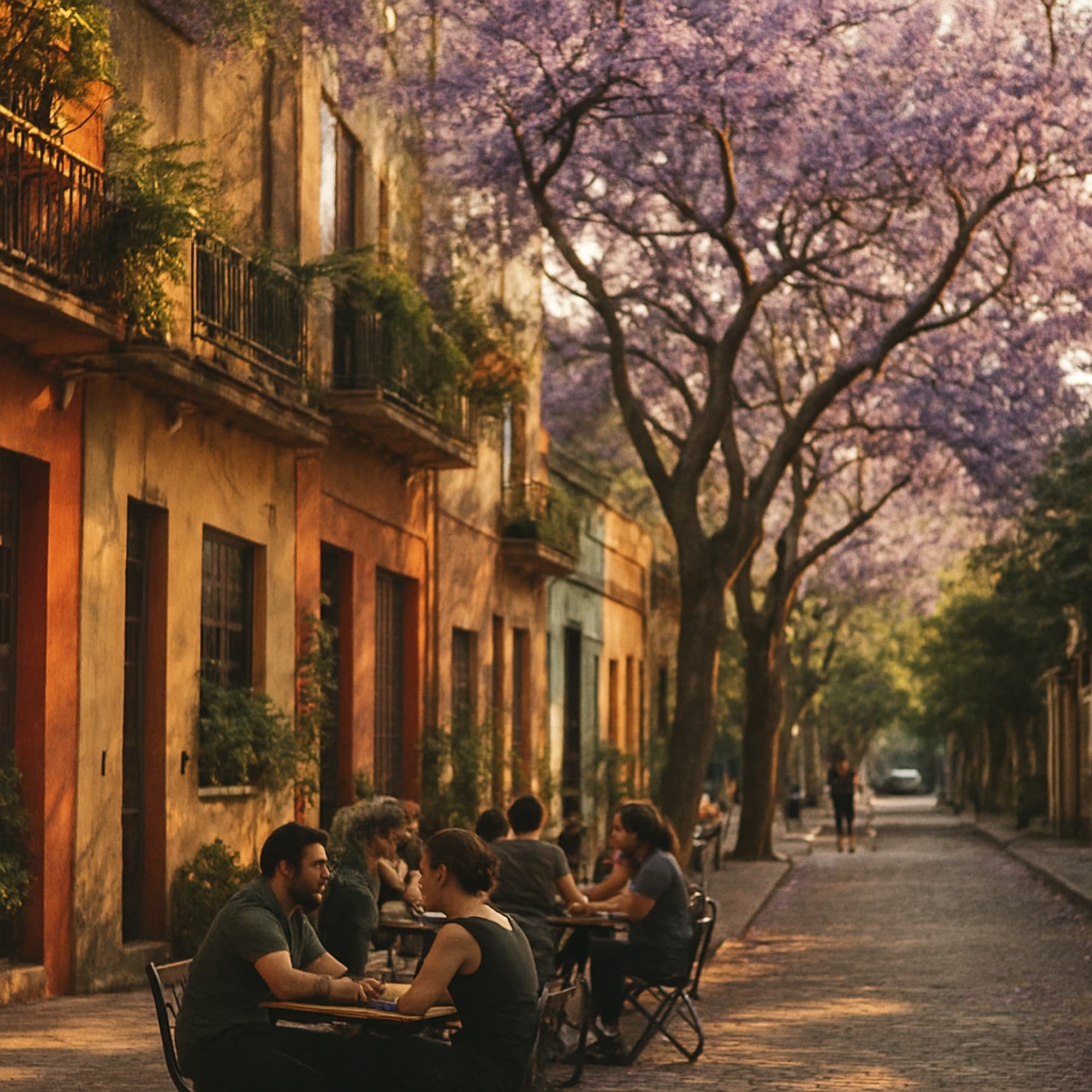
Mornings are slow and grand — a cortado in a century-old cafe, marble and brass and a waiter who has all the time in the world. The architecture alone makes the walk to anywhere feel like something.
The city is built for conversation. You linger. Plans form on the sidewalk. There's culture on every block: bookshops, milongas, late films, and warmth that pulls you out of your own head.
Dinner starts at ten and ends whenever. It feels like Europe but lives with its heart wide open, and on a good night you remember what it was like to be genuinely charmed by where you live.
Rich enough to fall in love with the everyday again.
The honest texture
Not a score. The texture of an ordinary week.
We won't rank this place on a leaderboard — that's the whole point. Here's what daily life is honestly like, so you can feel whether it fits yours.
Pace
Fast
Late nights, culture, and constant conversation.
Cost of a good life
Low (for now)
Your outside income goes a long way here.
Long-stay path
Workable
Manageable entry, with some bureaucratic patience required.
Everyday safety
Moderate
Street-smart caution, as in any big capital.
Finding your people
Easy
Famously warm, social, and open to newcomers.
The last signal isn't on this card.
It's you. The Deep Read weighs all of this against who you actually are.
By the numbers
Buenos Aires in real, sourced figures
The texture above is the feel of the place. These are the numbers behind it — the same indices the Deep Read reasons over.
Cost of living
34.3 · NYC=100
Numbeo Cost of Living Plus Rent Index (NYC=100)
Safety index
37.01
Numbeo Safety Index 2026
Air quality
15.51 µg/m³ PM2.5
ACAG/WashU SatPM2.5 V6GL03 2024 (satellite-derived, 0.01° grid, ±0.05° city mean)
Healthcare index
68.01
Numbeo Health Care Index 2026
English proficiency
High
EF EPI 2024 (country) + expat-ease
Digital-nomad visa
Yes
Income for long-stay
~$1,237/mo
Permanent residency
~3 years
Top income-tax rate
35%
Sources: air quality from the Atmospheric Composition Analysis Group at Washington University in St. Louis (SatPM2.5 V6GL03, CC BY 4.0); climate normals from ERA5; terrain from Copernicus GLO-90; plus Numbeo, EF EPI, Walk Score, and country immigration and tax data, as of 2026. Indices are directional, not precise. Visa, tax, and residency rules change — verify with official sources before you move.
The practical reality
What moving to Buenos Aires actually takes
The feel of a place is one thing; the logistics are another. Here's the honest practical picture — cost, visas, tax, healthcare, and language — drawn from real data.
What it costs to live in Buenos Aires
On Numbeo's cost-of-living-plus-rent index (New York = 100), Buenos Aires sits at 34.3. That puts day-to-day life roughly 66% below New York — the kind of gap that turns a tight budget at home into genuine breathing room.
Treat that as a base rate, not a personal budget: it moves with your neighbourhood, whether you rent short or long, and how local you live. The index is a starting point for "can my income stretch here" — your actual number depends on the life you'd build.
Visas and staying long-term in Argentina
Argentina offers a dedicated digital-nomad or remote-work visa and a retirement or passive-income route, with the easiest long-stay route asking around $1,237 a month in income. For a typical non-EU mover, the process is a moderate lift — doable with the right route and paperwork.
If you stay, permanent residency typically comes after about 3 years, and citizenship after roughly 2 years.
The specifics worth knowing: Rentista/pensionado floor is 5x SMVM PER APPLICANT (no household pooling), verified 2026-07: SMVM ARS 372,400 → ARS 1,862,000/mo ≈ USD 1,237 @1,505. Asset-derived income only — personal work income is expressly excluded, so a remote earner cannot use it at any salary. Citizenship after just 2y residence. Worldwide income but foreign savings often untaxed; top 35%.
Immigration rules change often — confirm the current requirements with official sources before you commit.
Tax as a foreign resident
Once you become tax-resident, Argentina generally taxes worldwide income. The top personal rate is around 35%. This is the single most expensive thing to get wrong, and it turns on residency rules and your own situation.
This is general information, not tax advice. Before you move, get your specific case reviewed by a professional who knows both Argentina and your home country.
Healthcare as a foreigner
For a newcomer, accessing care here is straightforward and affordable. On the specifics, a mid-tier private expat plan runs roughly $70 a month, and Buenos Aires scores 68.01 on Numbeo's healthcare index. Many movers carry private cover for speed and English-speaking clinics even where the public system is strong.
Language and everyday life
English is widely spoken in Buenos Aires. You can arrive and function from day one, though learning the local language still opens up the half of life that isn't transactional.
This life fits you if…
- You want romance, culture, and a city with real soul.
- You're social and thrive on conversation and nightlife.
- You bring outside income and want it to stretch.
It'll frustrate you if…
- You need economic stability and predictable prices.
- You want an early-to-bed, quiet, orderly rhythm.
The catch nobody mentions
Argentina's economy is volatile — inflation and currency swings are a way of life, and what's cheap today can shift fast. The romance is real; the financial ground underneath it is not always steady.
One honest question
Buenos Aires is a beautiful life. The only question is whether it's yours.
A list can show you the life. It can't tell you if you'd thrive in it. The Deep Read weighs Buenos Aires against who you actually are — and tells you the truth, with reasons.