For the ones chasing sun, ambition, and reinvention
MiamiUnited States
A warm, fast, internationally-minded city where ambition and reinvention run on year-round summer.
A day in this life
What it actually feels like to live here
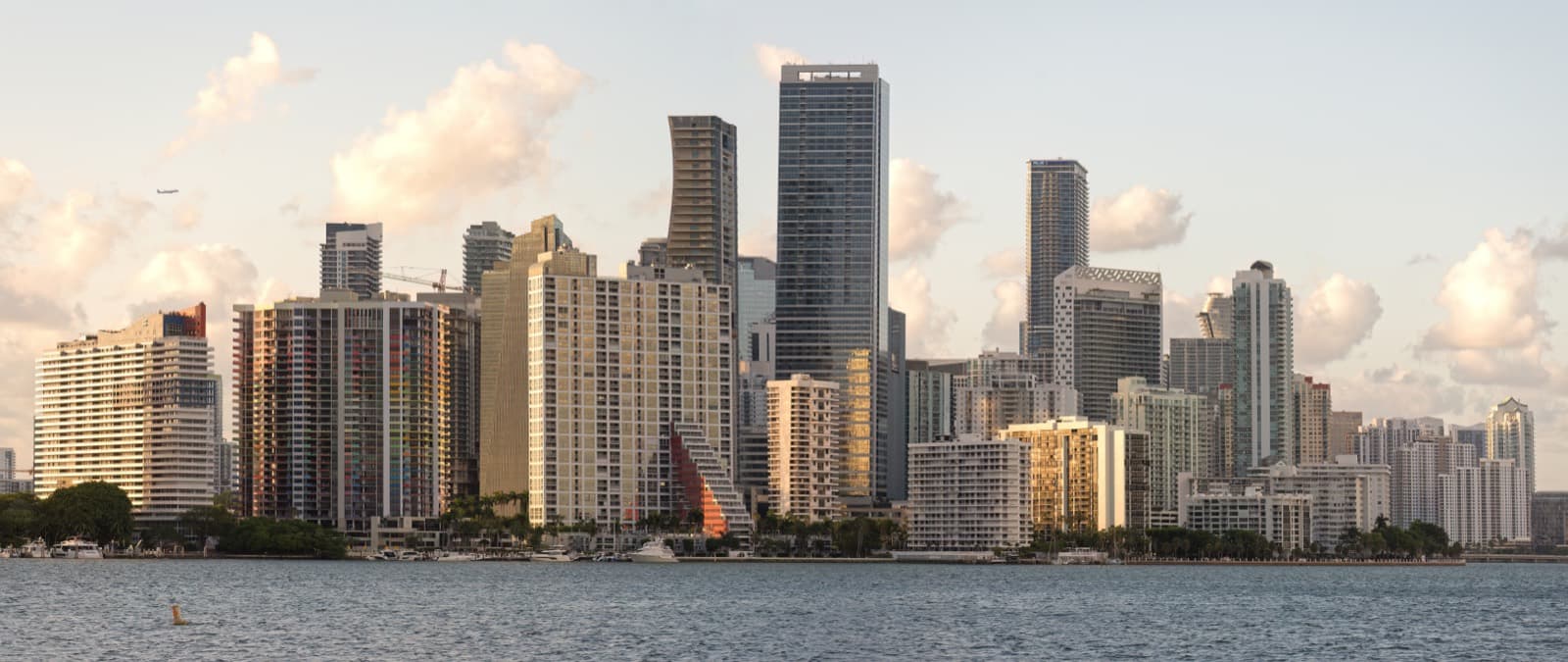
Mornings start bright and humid, a cafecito at a Brickell counter, the bay flashing between towers. The city is already moving by the time you are, in two languages, with somewhere to be.
The day is business and motion: a meeting that turns into a deal, a gym at noon, a call with someone three time zones south. Miami works hard and shows it. The hustle is the culture, and it pulls you in.
Evenings spill outdoors, dinner late and loud, salsa or house depending on the block, the heat finally soft. You go home having moved something forward, in a city that never quite cools down, in any sense.
Sun, hustle, and no state income tax, at full volume.
The honest texture
Not a score. The texture of an ordinary week.
We won't rank this place on a leaderboard — that's the whole point. Here's what daily life is honestly like, so you can feel whether it fits yours.
Pace
Fast
Ambitious and high-energy, business at all hours.
Cost of a good life
High
Among the priciest US cities now. The affordability is gone.
Long-stay path
Easy for Americans
Simple to relocate within the US; hard for non-Americans, with no nomad visa.
Everyday safety
Varies
Neighbourhood-dependent, like any big city.
Finding your people
Easy
A huge international, Latin-American, and transplant mix already in motion.
The last signal isn't on this card.
It's you. The Deep Read weighs all of this against who you actually are.
By the numbers
Miami in real, sourced figures
The texture above is the feel of the place. These are the numbers behind it — the same indices the Deep Read reasons over.
Cost of living
74.8 · NYC=100
Numbeo Cost of Living Plus Rent Index (NYC=100)
Safety index
47.3
Numbeo Safety Index 2026
Air quality
8.8 µg/m³ PM2.5
ACAG/WashU SatPM2.5 V6GL03 2024 (satellite-derived, 0.01° grid, ±0.05° city mean)
Healthcare index
63.4
Numbeo Health Care Index 2026
English proficiency
native/official
EF EPI 2024 (country) + expat-ease
Walkability
77
Walk Score
Digital-nomad visa
No dedicated route
Top income-tax rate
37%
Sources: air quality from the Atmospheric Composition Analysis Group at Washington University in St. Louis (SatPM2.5 V6GL03, CC BY 4.0); climate normals from ERA5; terrain from Copernicus GLO-90; plus Numbeo, EF EPI, Walk Score, and country immigration and tax data, as of 2026. Indices are directional, not precise. Visa, tax, and residency rules change — verify with official sources before you move.
The practical reality
What moving to Miami actually takes
The feel of a place is one thing; the logistics are another. Here's the honest practical picture — cost, visas, tax, healthcare, and language — drawn from real data.
What it costs to live in Miami
On Numbeo's cost-of-living-plus-rent index (New York = 100), Miami sits at 74.8. That puts day-to-day life noticeably cheaper than New York (about 25% lower), without being a budget destination.
Treat that as a base rate, not a personal budget: it moves with your neighbourhood, whether you rent short or long, and how local you live. The index is a starting point for "can my income stretch here" — your actual number depends on the life you'd build.
Visas and staying long-term in United States
The United States has no dedicated nomad or retirement visa, so staying long-term means working through standard residence routes. For a typical non-EU mover, the process is one of the harder ones, so plan for time and documentation.
If you stay, there's no clear permanent-residency track, and citizenship after roughly 5 years.
The specifics worth knowing: No nomad/retirement visa; PR via employment/family lottery-gated, then 5yr to citizenship. Taxes worldwide income; costly care.
Immigration rules change often — confirm the current requirements with official sources before you commit.
Tax as a foreign resident
Once you become tax-resident, the United States generally taxes worldwide income. The top personal rate is around 37%. For a foreign earner that's on the heavier side. This is the single most expensive thing to get wrong, and it turns on residency rules and your own situation.
This is general information, not tax advice. Before you move, get your specific case reviewed by a professional who knows both the United States and your home country.
Healthcare as a foreigner
For a newcomer, accessing care here is harder and more expensive. On the specifics, a mid-tier private expat plan runs roughly $500 a month, and Miami scores 63.4 on Numbeo's healthcare index. Many movers carry private cover for speed and English-speaking clinics even where the public system is strong.
Language and everyday life
English is widely spoken in Miami. You can arrive and function from day one, though learning the local language still opens up the half of life that isn't transactional.
This life fits you if…
- You're building something and want sun, energy, and tax efficiency.
- You speak Spanish or want to live inside Latin-American culture.
- You come alive in warm, social, high-velocity cities.
It'll frustrate you if…
- You want quiet, calm, and a low cost of living.
- You need four seasons and relief from heat and humidity.
The catch nobody mentions
Miami runs hot in every sense: the summers are brutal and humid, hurricane season is real, and the cost of living has caught up with the glamour. The energy is intoxicating, but it asks for ambition and a budget to match.
One honest question
Miami is a beautiful life. The only question is whether it's yours.
A list can show you the life. It can't tell you if you'd thrive in it. The Deep Read weighs Miami against who you actually are — and tells you the truth, with reasons.