For the ones who want sun, space, and a budget that works
PhoenixUnited States
A sunny, spacious, affordable desert city, if you can plan your life around the heat.
A day in this life
What it actually feels like to live here
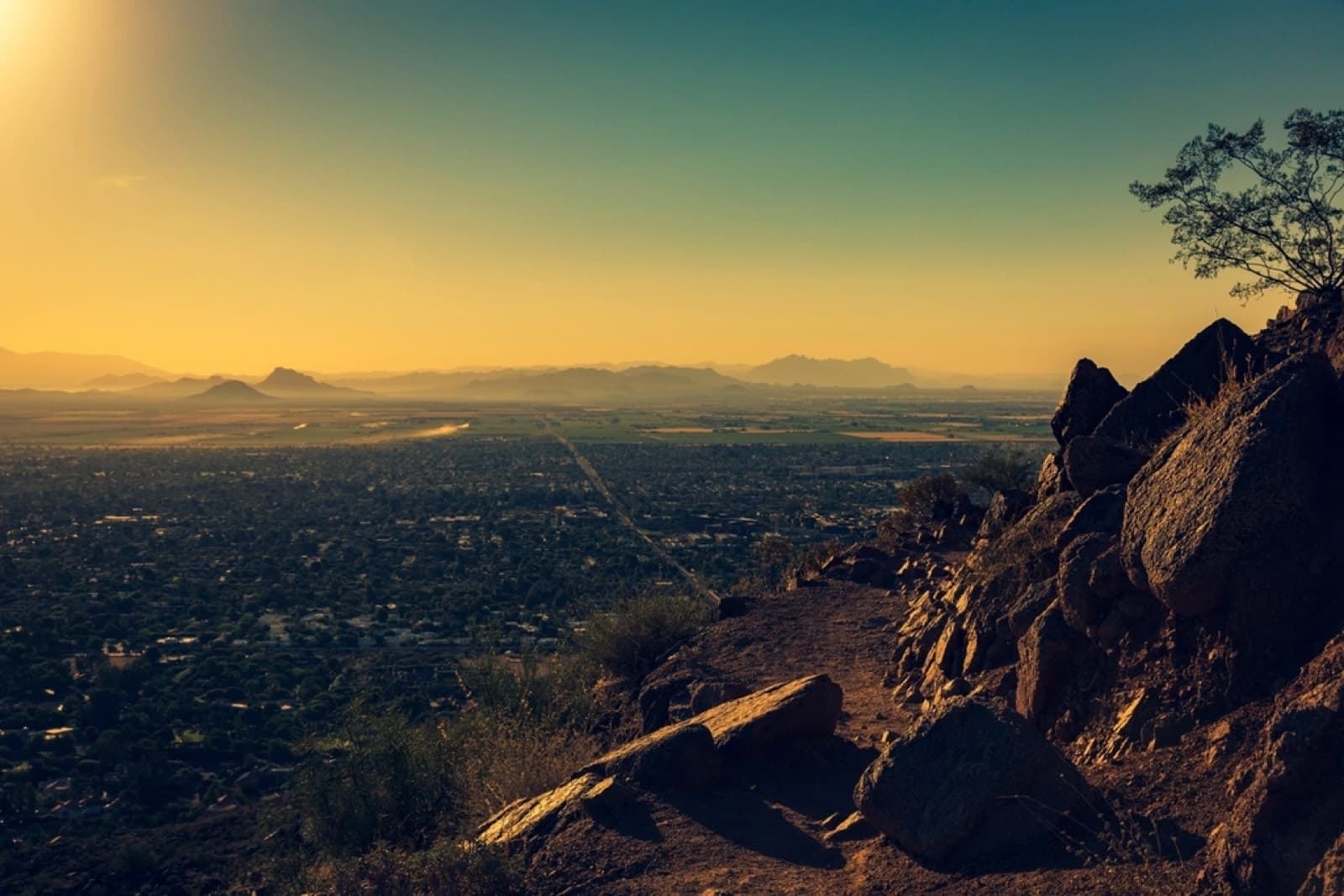
Winter mornings are perfect: dry, bright, cool enough for a hike up the mountain in the middle of the city before work. The light is clean and the sky goes on forever.
The day is easy and spread out: a drive to the office or a desk at home, errands in a new strip of suburb, lunch somewhere with a patio you can actually use most of the year. Life here has room in it.
Evenings are the backyard and the pool, the desert cooling fast after dark, the mountains turning purple. For most of the year it's the good life, cheap, and you can't quite believe more people don't know.
Sun, space, and affordability, with a steep summer.
The honest texture
Not a score. The texture of an ordinary week.
We won't rank this place on a leaderboard — that's the whole point. Here's what daily life is honestly like, so you can feel whether it fits yours.
Pace
Relaxed
Spacious and unhurried, a suburban desert rhythm.
Cost of a good life
Moderate
Far cheaper than the West Coast, though rising.
Long-stay path
Easy for Americans
Simple domestic move; hard for non-Americans, with no nomad visa.
Everyday safety
High
Calm and easy across most of the metro.
Finding your people
Workable
A big mix of transplants and retirees, warm but spread out.
The last signal isn't on this card.
It's you. The Deep Read weighs all of this against who you actually are.
By the numbers
Phoenix in real, sourced figures
The texture above is the feel of the place. These are the numbers behind it — the same indices the Deep Read reasons over.
Digital-nomad visa
No dedicated route
Top income-tax rate
37%
Sources: air quality from the Atmospheric Composition Analysis Group at Washington University in St. Louis (SatPM2.5 V6GL03, CC BY 4.0); climate normals from ERA5; terrain from Copernicus GLO-90; plus Numbeo, EF EPI, Walk Score, and country immigration and tax data, as of 2026. Indices are directional, not precise. Visa, tax, and residency rules change — verify with official sources before you move.
The practical reality
What moving to Phoenix actually takes
The feel of a place is one thing; the logistics are another. Here's the honest practical picture — cost, visas, tax, healthcare, and language — drawn from real data.
Visas and staying long-term in United States
The United States has no dedicated nomad or retirement visa, so staying long-term means working through standard residence routes. For a typical non-EU mover, the process is one of the harder ones, so plan for time and documentation.
If you stay, there's no clear permanent-residency track, and citizenship after roughly 5 years.
The specifics worth knowing: No nomad/retirement visa; PR via employment/family lottery-gated, then 5yr to citizenship. Taxes worldwide income; costly care.
Immigration rules change often — confirm the current requirements with official sources before you commit.
Tax as a foreign resident
Once you become tax-resident, the United States generally taxes worldwide income. The top personal rate is around 37%. For a foreign earner that's on the heavier side. This is the single most expensive thing to get wrong, and it turns on residency rules and your own situation.
This is general information, not tax advice. Before you move, get your specific case reviewed by a professional who knows both the United States and your home country.
Healthcare as a foreigner
For a newcomer, accessing care here is harder and more expensive. On the specifics, a mid-tier private expat plan runs roughly $500 a month. Many movers carry private cover for speed and English-speaking clinics even where the public system is strong.
This life fits you if…
- You want sun, space, and affordability over scenery and density.
- You're a remote worker or retiree planning life around the cooler months.
- You love desert hiking, golf, and dry, bright winters.
It'll frustrate you if…
- You need a livable summer and walkability.
- You want green, water, and four real seasons.
The catch nobody mentions
The summer is the catch, and it's a big one: four months above 100 degrees, often well past 110, plus deeper questions about water and how long this kind of growth can last in a desert. It works for people who respect the heat, plan around it, and don't mind driving everywhere.
One honest question
Phoenix is a beautiful life. The only question is whether it's yours.
A list can show you the life. It can't tell you if you'd thrive in it. The Deep Read weighs Phoenix against who you actually are — and tells you the truth, with reasons.